Beginner in Game Development, Which Engine Should I Use? Comparison of Unity vs Unreal vs Godot (Focusing on Free Engines) Choosing a Game Engine: Know This First: 5 Key Q&A Q1. What is a Game Engine? Is it necessary to use one? A. Think of a game engine as a set of development tools that bundles essential functions required for making games, similar to a car engine. It includes features like rendering graphics on-screen ( Rendering ), physics effects for characters colliding with walls or jumping ( Physics Engine ), and playing background music or sound effects ( Audio System ). While it's possible to create a game from scratch without an engine, it requires an immense amount of time and effort, which is why most developers today use game engines, especially beginners! Q2. I want to start game development; are there any good free engines available? A. Yes,...
AI Stock Overview: Key Players You Need to Know from Nvidia to HBM
AI Stocks: What You Need to Know First - 5 Key Q&As
Q1. What is the real engine behind the current 'AI investment' boom?
The biggest driving force is the massive investments (CAPEX) from giant IT companies like Microsoft, Google, and Amazon. For instance, Microsoft announced that it would invest $30 billion (about 40 trillion won) in AI infrastructure in a single quarter. This money eventually flows into data centers, AI semiconductors, and power supply companies.
Q2. Who leads the AI semiconductor market?
Currently, the strongest lineup consists of Nvidia (AI chip design) - TSMC (manufacturing) - ASML (key equipment) - SK Hynix/Samsung (HBM memory). TSMC has seen improved performance due to a surge in AI chip orders, and ASML's semiconductor equipment orders have also skyrocketed. SK Hynix is leading the HBM (high bandwidth memory) market, which is essential for AI servers.
Q3. What is Nvidia's status?
It can be considered the absolute powerhouse in the AI chip market. In its data center business alone, it recorded revenue exceeding $39 billion (about 50 trillion won) in just one quarter, demonstrating remarkable growth. However, variables such as U.S. government export restrictions to China should always be monitored.
Q4. What will be the next field to experience the AI boom after semiconductors?
It is spreading across various fields. Companies that produce AI servers and networking equipment (like Supermicro and Arista), software or data platform companies utilizing AI (like Adobe and Snowflake), and firms related to AI PCs or smartphone chips (like Intel and Qualcomm) are gaining attention. Japanese robotics and automation companies cannot be overlooked either.
Q5. What are the main risks to be aware of in AI investment?
There are three major risks. First is high interest rates. When rates are high, it becomes burdensome for companies to make large-scale investments. Second are physical limitations, such as power or data center locations, and third are geopolitical risks, like semiconductor export controls between the U.S. and China.
The term 'AI era' truly feels tangible now. It has become a massive trend that is changing the landscape of industries worldwide, going beyond just new technology. At the center of this transformation is, of course, the astronomical flow of money, or 'investment.' However, when it comes to AI-related stocks, it can feel quite vague. Semiconductors? Cloud? Software? Where do we start and how do we approach it? This article summarizes the complex AI industry ecosystem, identifying the main players in each sector and what we should pay attention to moving forward in an easy-to-understand manner.
AI Industry Map: Who is Competing Where?
The big picture of AI investment can be seen as 'investment from major IT companies → building AI infrastructure → expansion of AI services.' Let's take a look at the key companies playing important roles at each stage.
1. Companies Creating the Heart of AI: Semiconductors
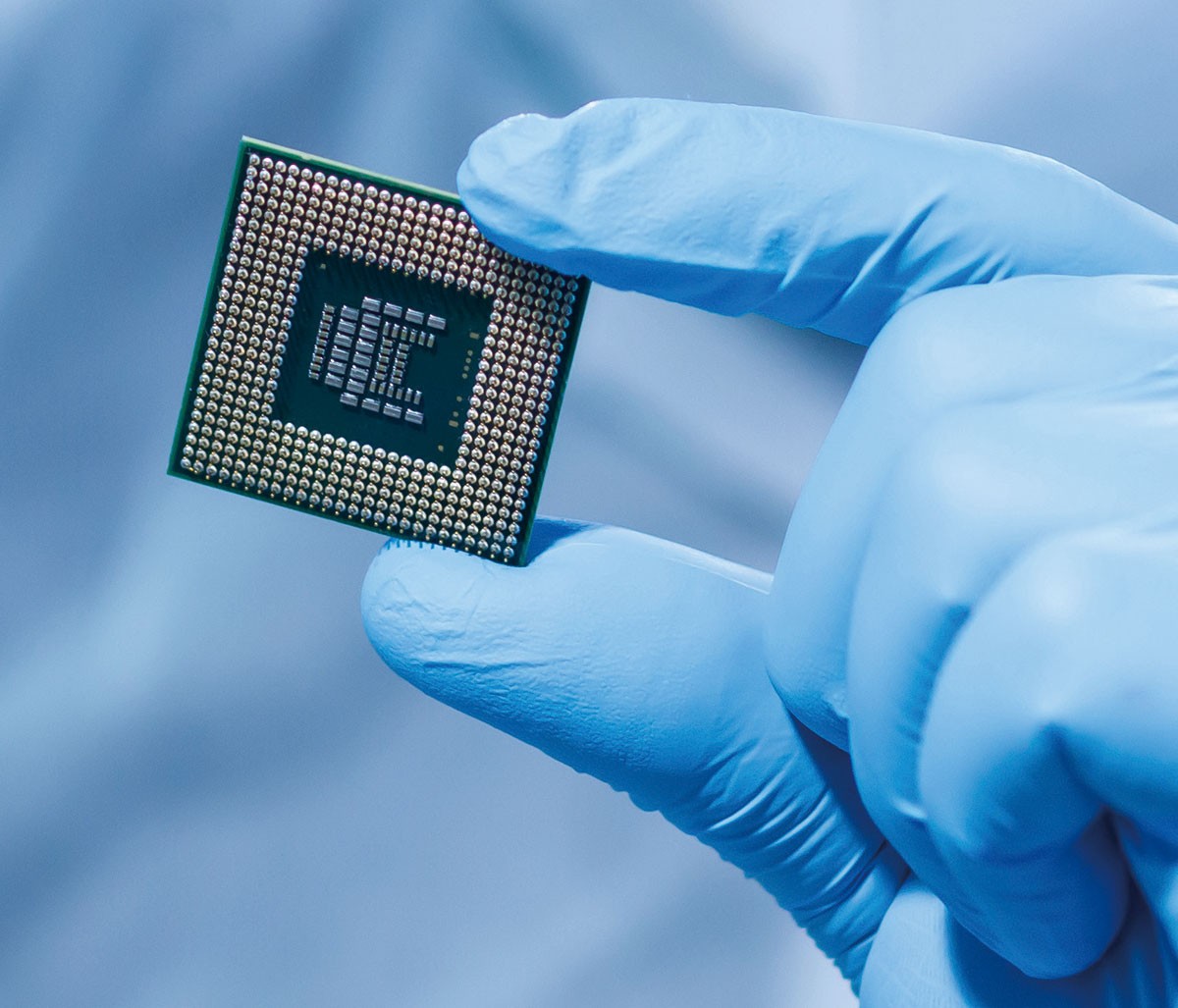
The foundation of all AI technology ultimately lies in semiconductors. Who designs and manufactures semiconductors specialized for AI computation and what components are involved are of utmost importance.
Accelerators/Chip Design (GPU, NPU): Nvidia dominates the market, with AMD following closely behind.
Memory (HBM): A key component that determines the performance of AI servers. Currently, SK Hynix is leading in technology and market share, with Samsung and Micron competing.
Foundry (Semiconductor Contract Manufacturing): Factories that actually produce AI chips designed by companies like Nvidia. In this field, Taiwan's TSMC is benefiting the most with its outstanding technology.
Equipment (EUV, etc.): Foundries like TSMC need ASML's EUV lithography equipment from the Netherlands to create advanced semiconductors. Due to the AI boom, orders for this equipment are surging.
Episode: IT Journalist Park Jin-woo's HBM Coverage
IT journalist Park Jin-woo recently covered SK Hynix's earnings announcement and felt the heat of the AI market. "In the past, semiconductors seemed vaguely difficult, but once I realized that HBM is the key to solving AI's bottleneck, the story became clear. No matter how good Nvidia's GPU is, it can't perform without HBM that supplies data quickly." He came to see the growth of the HBM market as an important gauge for the overall pace of the AI industry.
If the hardware of semiconductors is ready, let's meet the players utilizing this infrastructure.
2. Land and Building Owners of the AI Era: Platforms & Infrastructure
For AI technology to be actually serviced, a massive 'building' in the form of data centers and 'land' in the form of cloud infrastructure is needed. The strong players in this field are leading the AI ecosystem with their vast capital.
Hyperscalers / Platforms
Companies like Microsoft, Google (Alphabet), Amazon, and Meta. They provide AI technology through their own cloud services (Azure, GCP, AWS) and AI models (ChatGPT, Gemini, etc.), generating the highest profits. Their massive investments in data centers are essentially the lifeblood of the entire AI industry.
Servers and Networking
AI data centers require specialized servers and networking equipment that differ from conventional data centers. Companies like Supermicro, which manufactures AI-customized servers, and Arista Networks, known for high bandwidth switches, are hidden champions in this trend.
Episode: Changing Perspective of Individual Investor Lee Hana
Individual investor Lee Hana initially was only interested in flashy stocks like Nvidia. However, as she studied more, she realized that the key to AI investment lies in 'infrastructure.' "Ultimately, to run AI models, a massive scale of data centers is needed, and the servers, switches, and cooling systems that fill them can be the real moneymakers," she noted. Now, when she reads AI-related news, she pays more attention not only to new model announcements but also to quarterly CAPEX announcements from companies like MS and Google.
Future Watch Points (FAQ)
Q. How can we view future scenarios for AI investment?
The best scenario is for major IT companies' investments in data centers to continue and for AI technology to rapidly spread to personal devices like smartphones or PCs (on-device AI). Conversely, if interest rates remain high or power shortages worsen, companies may slow down their investment pace, leading to a decrease in semiconductor equipment orders and a potential slowdown for the entire industry.
Q. What economic data should be checked when investing?
I recommend focusing on three key points. First, be sure to check the quarterly CAPEX (capital expenditure) plans of hyperscalers. This is the most important signal indicating market direction. Second, TSMC's earnings announcements and guidance can help confirm demand for advanced semiconductors. Finally, keep an eye on the trend of long-term interest rates in the U.S. to see if companies' investment costs are increasing.
Q. What specifically is meant by 'geopolitical risk'?
It mainly refers to the U.S. government's semiconductor export control measures against China. This can directly impact companies with a high proportion of revenue from China, like Nvidia, and can change the flow of semiconductor equipment or technology, affecting the entire industry.
Author Information: The content of this article is summarized based on primary articles from major foreign media such as Reuters and The Wall Street Journal, along with cross-references from each company's earnings announcement materials, focusing on the core supply chain of the AI industry (accelerators-foundry-equipment-HBM-platform) and current trends, as well as risk factors based on objective data.


Comments
Post a Comment