Beginner in Game Development, Which Engine Should I Use? Comparison of Unity vs Unreal vs Godot (Focusing on Free Engines) Choosing a Game Engine: Know This First: 5 Key Q&A Q1. What is a Game Engine? Is it necessary to use one? A. Think of a game engine as a set of development tools that bundles essential functions required for making games, similar to a car engine. It includes features like rendering graphics on-screen ( Rendering ), physics effects for characters colliding with walls or jumping ( Physics Engine ), and playing background music or sound effects ( Audio System ). While it's possible to create a game from scratch without an engine, it requires an immense amount of time and effort, which is why most developers today use game engines, especially beginners! Q2. I want to start game development; are there any good free engines available? A. Yes,...
A. Yes. Snoring is simply a sound caused by a narrowed airway, but sleep apnea is a condition where breathing repeatedly stops or becomes shallow during sleep.
Q2. What symptoms mean I should see a doctor?
A. If family members say you stop breathing during sleep, you wake up with headaches and a dry mouth, or you experience uncontrollable daytime sleepiness (especially while driving), you should consider getting checked.
Q3. How is sleep apnea diagnosed? Do I have to sleep at the hospital?
A. The most accurate test is a polysomnography (PSG) conducted overnight at a sleep center. However, for adults without any special complications, a home sleep apnea test (HSAT) is also possible.
Q4. What is the AHI score?
A. This index indicates how many times apnea and hypopnea occur per hour. For adults, it's usually diagnosed as sleep apnea if it's 5 or more times per hour, and classified as severe if it's over 30 times.
Q5. Is a CPAP machine (mask) the only treatment option?
A. CPAP therapy is the most standard first-line treatment, but for those who find it difficult to adapt or for mild cases, a custom-made oral appliance from a dentist can be a good alternative. Weight loss and surgery are also considered depending on the patient's condition.
Sleep is not just the end of the day, but the preparation for the beginning of tomorrow. But what if an invisible intruder steals your breath every night? The reality behind the familiar sound of "snoring" – sleep apnea – is more serious than you might think. This isn't just a matter of sleep habits, it's a silent threat that can erode your quality of life and long-term health. From now on, we'll uncover the truth of that threat and trace the clues to regaining a peaceful night's sleep.
Warning Signs: Beyond Simple Snoring
Many people don't take snoring seriously, but not all snoring is the same. Especially if there's a pattern of quiet breathing suddenly followed by gasping for air ("snort-pause-gasp"), this could be a strong sign of sleep apnea.
Untreated sleep apnea increases the risk of high blood pressure and cardiovascular disease. Excessive daytime sleepiness can lead to serious accidents while driving or working. In fact, studies show that untreated patients have a 2-3 times higher risk of traffic accidents.
So how can you know for sure if your snoring is dangerous?
"I thought I was just tired, but it turned out to be..."
50-year-old Park Cheol-min, a bus driver, said, "Lately, I've been falling asleep at the wheel, and I thought it was just age. But my wife was worried because I kept stopping breathing at night, so I went to a sleep clinic. The test showed I had severe sleep apnea, with over 40 events per hour. It wasn't simple fatigue; my brain was awake all night."
When there are such suspicious symptoms, what tests are done at the hospital for diagnosis?
Diagnosis: Polysomnography (PSG) and Home Sleep Apnea Test (HSAT)
The standard test for diagnosing sleep apnea is a polysomnography (PSG), where you spend a night at the hospital having all your vital signs monitored. It's the most accurate, but can be inconvenient.
To address this, a home sleep apnea test (HSAT) is used for adults without complications. However, international guidelines recommend a PSG test at a hospital for complex cases, such as those with severe heart or lung disease or neuromuscular disorders.
After the test, how is the treatment decided?
Treatment Options: Finding the Right Solution for You
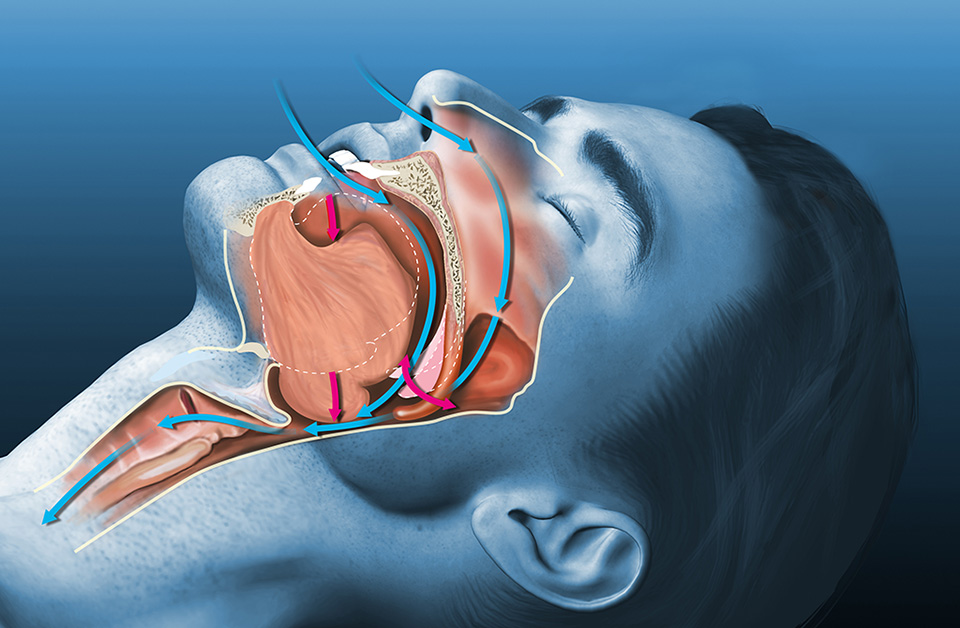
The goal of sleep apnea treatment is to open the blocked airway during sleep to restore normal breathing. Various treatments are tailored to the patient's condition and preferences.
1. CPAP Therapy
This is the standard treatment recommended for moderate to severe sleep apnea. A mask delivers continuous air pressure during sleep to physically prevent the airway from narrowing or closing. It's very effective, but some find the mask uncomfortable.
This is a good alternative for those who can't tolerate CPAP or have mild to moderate sleep apnea. A mouthguard-like device is worn at night to slightly pull the lower jaw forward, widening the airway. It's portable and quiet.
"I found relief with an oral appliance instead of a CPAP machine"
Lee Su-yeong, a 40-year-old office worker who failed CPAP therapy, said, "The mask was too stuffy, and the sound of the air kept me awake. So I gave up on CPAP. After consulting with my doctor, I had a custom-made oral appliance made at a dental clinic. My jaw was a bit stiff at first, but I quickly adapted, and best of all, my snoring disappeared, and I wake up refreshed."
3. Other Treatments (Lifestyle Changes, Surgery, etc.)
For overweight or obese patients, weight loss can significantly improve apnea. For those whose symptoms worsen when sleeping on their back, positional therapy can help. If there's a clear anatomical problem (e.g., enlarged tonsils or tongue), surgery may be considered.
Based on all this information, what can we do to improve our sleep?
Conclusion: Checklist for Healthy Sleep
Sleep apnea is a condition that requires treatment and management, not just simple snoring. Check this final checklist to protect your sleep health.
Don't ignore it if family members mention your snoring or breathing during sleep.
If daytime sleepiness interferes with your daily life, don't delay visiting a sleep clinic.
If CPAP therapy is uncomfortable, talk to your doctor about other options before giving up.
Remember that maintaining a healthy weight, avoiding alcohol, and not smoking are fundamental to all treatments.
Finally, let's look at some additional questions you might have.
Frequently Asked Questions (FAQ)
Q. Is polysomnography covered by health insurance?
A. Yes, if a doctor determines that you meet specific criteria (such as sleep apnea or narcolepsy), health insurance will cover a portion of the cost. In this case, you can also file a claim with your supplemental insurance.
Q. Can CPAP machines be rented with health insurance?
A. Yes, if you are diagnosed with sleep apnea above a certain level based on a polysomnography and pass a CPAP compliance test, you can rent a CPAP machine at a lower cost with health insurance coverage.
Q. Can children also develop sleep apnea?
A. Yes, they can. In children, the main cause is often enlarged tonsils and adenoids. If your child sleeps with their mouth open, has learning difficulties, delayed growth, or behaviors similar to ADHD, you should suspect childhood sleep apnea and get them checked.
Data and Author Information
The editor in charge of this topic cross-referenced guidelines from multiple regions (AASM, NICE, ERS, Japanese guidelines) and the latest reviews to organize the diagnosis, treatment, and lifestyle tips for snoring/sleep apnea from a common national perspective.


Comments
Post a Comment