Beginner in Game Development, Which Engine Should I Use? Comparison of Unity vs Unreal vs Godot (Focusing on Free Engines) Choosing a Game Engine: Know This First: 5 Key Q&A Q1. What is a Game Engine? Is it necessary to use one? A. Think of a game engine as a set of development tools that bundles essential functions required for making games, similar to a car engine. It includes features like rendering graphics on-screen ( Rendering ), physics effects for characters colliding with walls or jumping ( Physics Engine ), and playing background music or sound effects ( Audio System ). While it's possible to create a game from scratch without an engine, it requires an immense amount of time and effort, which is why most developers today use game engines, especially beginners! Q2. I want to start game development; are there any good free engines available? A. Yes,...
Types of Steroids, They're Not All the Same - Differences and Variations
Types of Steroids: Not All the Same - Injectable vs Oral, and Everything About Legal Prices
Steroids: What You Should Know - 5 Key Q&As
Q1. Are all drugs referred to as 'steroids' the same?
Not at all. What we commonly refer to as 'steroids' includes various families with completely different purposes and actions. The anabolic steroids (AAS) that are problematic in athlete doping are for muscle building, while glucocorticoids are prescribed in hospitals to treat inflammation for conditions like atopic dermatitis or arthritis. They might share a name, but they are completely different drugs.
Q2. There are so many types; how do I distinguish them?
Broadly, they can be categorized into 'injectable testosterone preparations' based on male hormones, 'synthetic anabolic steroids (AAS)' that are artificially synthesized, and 'glucocorticoids' used for treating inflammation. SARMs (Selective Androgen Receptor Modulators), mentioned in today's fitness community, are not technically steroids but are drugs that produce similar effects and are under FDA warning for lack of approval.
Q3. What are the differences between oral and injectable medications?
The biggest difference is their impact on the liver. Some oral steroids (17-alpha-alkylated) have been chemically altered to be well absorbed without being broken down in the liver, which significantly increases the risk of liver toxicity. In contrast, injectables bypass the liver directly, reducing that risk, but they can also cause other systemic side effects.
Q4. What is the price if prescribed legally?
It varies greatly depending on the healthcare system of each country. For example, in the U.S., with a doctor's prescription and pharmacy discount programs, testosterone injections (like testosterone cypionate) can be obtained for as little as a few dozen dollars. In the UK, under the National Health Service (NHS), patients pay a fixed co-payment of about £10 (approximately 17,000 KRW) per prescription.
Q5. Why can't we know the prices in the illegal market?
Due to safety and legal issues. There is no guarantee of the purity or accurate dosage of drugs distributed illegally, making them extremely dangerous. Additionally, non-medical use and distribution are illegal in most countries, so it is the principle not to deal with information outside legal medical consultations and prescriptions.
What comes to mind when you hear the word 'steroids'? Most likely, you think of bodybuilders with bulging muscles or drug scandal controversies. But did you know that medications prescribed in hospitals for treating inflammation are also a type of steroid? The term 'steroid' does not have just one face. Today, we will explore the various drugs grouped under the name 'steroid,' their lineage and differences, and how they are used and managed within a legal medical system.
The Family Tree of Steroids: Who is Who?
Steroids can be broadly divided into three main families. Additionally, there is a new group often mentioned alongside them, known as 'SARMs.'
This is the most basic form, consisting of testosterone itself or drugs with similar structures. They are primarily prescribed legally by doctors for patients with abnormally low testosterone levels due to conditions like hypogonadism. They are often administered via intramuscular injection, with varying duration of effect depending on the type, requiring injections every few weeks.
Episode: The Legal Treatment Journey of Mr. Kim Seong-hoon in His 40s
Mr. Kim Seong-hoon, a man in his 40s, has suffered from chronic fatigue and lethargy for several years. After tests, he was diagnosed with significantly low testosterone levels. His doctor prescribed 'testosterone cypionate' injection therapy. "At first, I was scared by the word steroid. But my doctor explained that this is a legal treatment to balance my body's hormones, completely different from the illegal drugs used by athletes." He is now regularly receiving injections at the hospital and regaining his health.
2. Synthetic Anabolic Steroids (AAS)
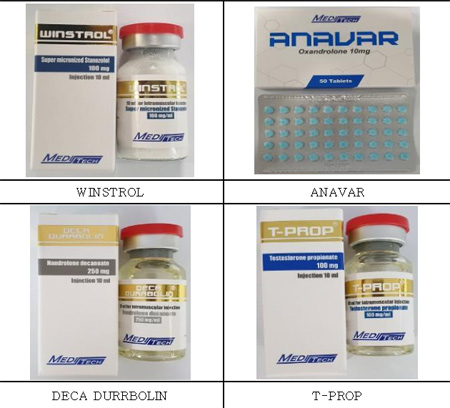
This family primarily consists of drugs that are problematic in sports doping. They are artificially created to maximize the muscle growth (anabolic) effects of testosterone while reducing male hormone side effects (androgenic) like hair loss or acne. They come in both oral and injectable forms, with some oral steroids modified to avoid breakdown in the liver, which poses a significant risk of liver toxicity.
3. Glucocorticoids (Anti-Inflammatory Drugs)
This type of steroid is not related to muscle but strongly suppresses our body's inflammatory responses. It is a crucial treatment for immune/inflammatory diseases like atopic dermatitis, rheumatoid arthritis, and asthma. In fact, prolonged use of this medication at high doses can result in muscle loss as a side effect.
4. SARMs (Selective Androgen Receptor Modulators)
SARMs are not technically steroids. However, they act on androgen receptors in muscle cells similarly to steroids, producing comparable effects. They are promoted online as a 'safer alternative to steroids,' but this is a very dangerous claim. SARMs have never been formally approved as medications by the FDA in the U.S., and serious side effects like liver toxicity and cardiovascular disease risks have been reported, leading the FDA to issue multiple strong warnings about these substances.
Episode: The Thrilling Curiosity of College Student Lee Min-jae
College student Lee Min-jae, active in the fitness community, became curious after reading a post recommending SARMs as 'safe steroids.' "I was honestly tempted by the claim that there are almost no side effects and good effects." However, just before purchasing, he checked the FDA's official website, where he was shocked to find a warning about the serious risks of side effects associated with SARMs, advising against their use. He sighed in relief, saying, "I almost made a big mistake believing the misinformation online."
So, what exactly differentiates these drugs? Let's take a closer look at the differences between the 'oral medications' and 'injections' that many are curious about.
Legal Price Landscape: What About Within the Medical System?
The information below is an example of cases where drugs are legally distributed based on a doctor's diagnosis and prescription. The actual costs borne by patients can vary greatly depending on the healthcare and insurance systems of each country.
United States: The U.S. has active price competition among pharmacies and discount programs (like GoodRx). Thanks to this, testosterone injections prescribed by doctors can be obtained for as low as a few dozen dollars using discount coupons. However, prices can vary widely based on insurance coverage.
United Kingdom: There is a strong public healthcare system called the National Health Service (NHS). Regardless of which medication is prescribed, patients only pay a fixed amount (as of 2025, £9.90) per prescription. This means the co-payment is standardized regardless of the actual price of the medication.
Japan: Japan also has a national health insurance system that manages drug prices. The government sets a price list, ensuring that all medications are sold at the same price, regardless of which hospital or pharmacy you go to.
Steroids: More Questions (FAQ)
Q. Why are oral steroids particularly dangerous for the liver?
Most oral medications undergo a breakdown process in the liver. However, some oral anabolic steroids have been intentionally chemically modified (17-alpha-alkylated) to avoid destruction during this process to maintain their effects. This is akin to disguising oneself to pass through the liver's 'checkpoint,' but this disguise itself causes tremendous stress and toxicity to the liver.
Q. Which steroids are prohibited under doping regulations?
The World Anti-Doping Agency (WADA) classifies all anabolic steroids (AAS) that can be used for muscle growth as S1 (anabolic agents) and prohibits them at all times. SARMs are also included in the banned list. In contrast, glucocorticoids, which are anti-inflammatory, have different regulations, where administration through certain routes (like injections) during competition is restricted.
Author Information: The contents of this article were compiled from authoritative sources such as the World Anti-Doping Agency (WADA), the U.S. FDA, and the National Institutes of Health (NIH), as well as cross-referencing official drug pricing/information from GoodRx, NHS, and other countries, providing an objective overview of the lineage and differences of various steroids and the legal price landscape.



Comments
Post a Comment