Beginner in Game Development, Which Engine Should I Use? Comparison of Unity vs Unreal vs Godot (Focusing on Free Engines) Choosing a Game Engine: Know This First: 5 Key Q&A Q1. What is a Game Engine? Is it necessary to use one? A. Think of a game engine as a set of development tools that bundles essential functions required for making games, similar to a car engine. It includes features like rendering graphics on-screen ( Rendering ), physics effects for characters colliding with walls or jumping ( Physics Engine ), and playing background music or sound effects ( Audio System ). While it's possible to create a game from scratch without an engine, it requires an immense amount of time and effort, which is why most developers today use game engines, especially beginners! Q2. I want to start game development; are there any good free engines available? A. Yes,...
What Happens If You Get Wegovy Just Once? (Effects, Side Effects, Duration Summary)
Before You Get 'One' Dose of Wegovy, Know This: 5 Key Q&A
Q1. Is there any weight loss effect even if I get it just once?
To be honest, it's hard to expect a significant weight loss effect that changes the numbers on the scale. You might feel a decrease in appetite for a few days as the medication takes effect, but Wegovy is designed as a long-term treatment that builds effectiveness over several months.
Q2. Why does it take continuous doses to see results instead of just one?
There are two reasons. First, the half-life of Wegovy (the time it takes for the drug's effectiveness to reduce by half) is about one week, so consistent weekly doses are necessary to maintain an effective concentration in the body. Second, to minimize side effects, it starts with a very low dose of 0.25mg and gradually increases to the target dose over four-week intervals.
Q3. How long did it take for effects to appear in actual clinical trials?
The well-known STEP-1 clinical trial lasted an impressive 68 weeks (about 1 year and 4 months). Participants consistently received injections during this period and experienced an average weight loss of 14.9%. There are no credible studies confirming weight loss from just a single injection.
Q4. What happens if I stop after consistently taking it?
Unfortunately, there is a clear tendency for weight to increase again. One study found that after stopping Wegovy, about two-thirds of the weight lost returned within a year. It's important to understand that the drug's effects are maintained only during the period of use.
Q5. Does that mean the 'one-time' strategy is pointless?
Yes, if your goal is weight loss. While you might gauge whether the drug suits you with a single experience, this approach does not align with the drug's original design or clinical evidence. Consistent dosing and lifestyle changes are the only way forward.
"Will there be any effect if I just try it once?" This is a question many have when considering Wegovy, the hottest diet injection these days. Like reaching for an energy drink in a pinch, there's a desire to expect 'one shot' results before an important appointment. However, our bodies are not machines, and interactions with medications follow a much more complex timetable. What exactly does a single dose of Wegovy do in our bodies, and how long does it last? Let's explore this reality based on clinical data and the drug's design.
Our Body's Timetable: Why Not Just 'One'?
Wegovy is designed as a long-term treatment due to how the drug works in our bodies and the time it takes. This is referred to as 'pharmacokinetics.'
The main ingredient in Wegovy, semaglutide, has a half-life of about one week. The half-life refers to the time it takes for the drug's concentration in the blood to reduce by half. In other words, after a single injection, its effects gradually fade over the course of a week. Therefore, to maintain a consistent effect, you need to administer it weekly, like balancing the rate at which water drains and fills to maintain a stable level. It takes several weeks just to reach this stable state.
Episode: A Short Experience of Office Worker Kim Min-ji
Office worker Kim Min-ji, in a rush before an important vacation, decided to try Wegovy just once. After the injection, she felt a decrease in appetite for a few days and noticed food didn't appeal to her as much. "Oh, it really seems to work!" However, that effect didn't last beyond a week, and during her vacation, her original appetite returned. She realized, "A single injection is not magic; it's just the 'first step' in a long-term treatment."
What Clinical Data Shows: The Cost of Accumulation and Stopping
Actual large-scale clinical research results clearly demonstrate why the 'one-time' strategy is meaningless.
Effects Accumulate
In the well-known STEP-1 study published in NEJM, participants consistently received Wegovy for 68 weeks. As a result, they achieved an average weight loss of 14.9%, which is an impressive effect. This indicates that the drug's effectiveness appears when it accumulates steadily over several months.
Stopping Leads to Regain
Conversely, what happens if you stop the medication? In the STEP-4 study, the group that continued treatment either lost more weight or maintained their weight, while the group that stopped the medication showed significant weight gain. In fact, other studies have indicated that a substantial portion of the weight lost returned after a year of stopping the drug. This clearly shows that the drug's effects disappear when usage is halted.
Episode: College Student Lee Joon-young's Lesson
College student Lee Joon-young successfully lost 20kg over a year of Wegovy treatment under medical supervision. Upon reaching his target weight, he thought, "I'm done now," and stopped the injections. However, within a few months, his suppressed appetite began to rise, and he quickly started gaining weight again. "I realized that I hadn't fully made the healthy eating habits I developed during treatment my own. The medication is just an aid; I have to do the real driving," he reflected later.
In-Depth Exploration: Why Start Wegovy Slowly at 0.25mg?
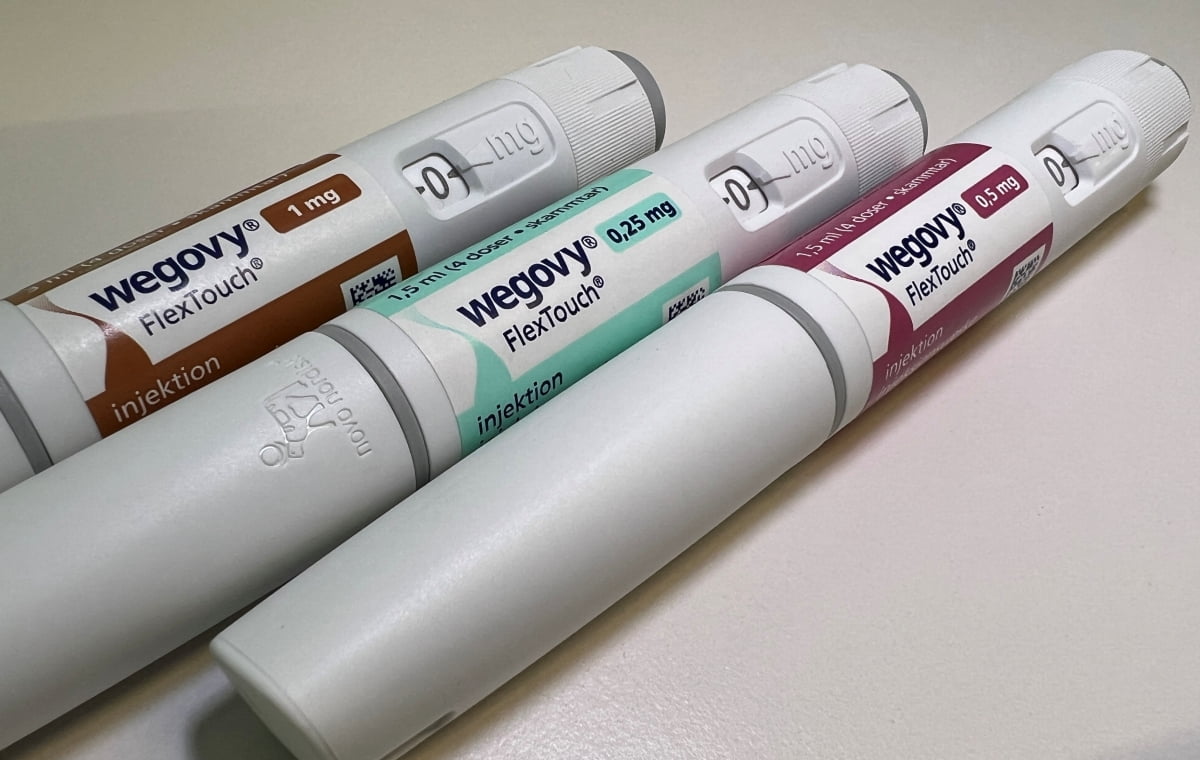
If you've received a Wegovy prescription, you may have found the dosage confusing. The final target dose is 2.4mg, but it starts at 0.25mg, which is one-tenth of that amount, and increases very slowly every month. Why go through this cumbersome process?
The reason is to give our bodies, especially the brain and gastrointestinal tract, time to adapt to the hormonal signals of GLP-1. Wegovy sends these signals strongly, and if you inject the maximum dose from the start, your body can experience 'shock' from the sudden change. It's like suddenly turning the volume of a quiet room's speaker up to 100. The result can manifest as severe nausea, vomiting, and diarrhea. If these side effects are too severe, most people would likely abandon the treatment.
Thus, the gradual increase in dosage every four weeks serves as a kind of 'adaptation training' for our bodies to become accustomed to the strong signals. Through this training, side effects are minimized while safely reaching the most effective treatment dose. This is another important reason why a 'one-time' injection is unlikely to yield meaningful effects.
Safe and Realistic Usage (FAQ)
Q. Who should not receive Wegovy?
Individuals with a personal or family history of medullary thyroid carcinoma or multiple endocrine neoplasia syndrome type 2 should never use this. Those who have previously had severe allergic reactions to the medication are also contraindicated, and individuals with a history of pancreatitis or gallbladder disease should consult with a doctor.
Q. What are the most common side effects, and how can they be managed?
The most common side effects are gastrointestinal issues like nausea, vomiting, and diarrhea. These typically occur when increasing the dosage and often subside over time. Reducing meal portions, avoiding fatty foods, and eating slowly can help alleviate symptoms.
Q. If I stop the medication, I will gain weight back. Does that mean I have to take it forever?
If obesity is viewed as a 'chronic condition' like hypertension or diabetes, the current consensus in the medical field is that long-term management is necessary. To prevent weight gain after stopping the medication, it's crucial to fully adopt healthy eating and exercise habits while on the medication. The medication acts as a powerful ally that allows time to establish those habits.
Author Information: The content of this article has been compiled based on a cross-review of primary sources such as official drug information from the U.S. FDA, key clinical studies published in NEJM and JAMA (STEP-1, STEP-4), and academic reviews related to pharmacokinetics to objectively summarize the realistic effects and limitations of "single-dose Wegovy."



Comments
Post a Comment