Beginner in Game Development, Which Engine Should I Use? Comparison of Unity vs Unreal vs Godot (Focusing on Free Engines) Choosing a Game Engine: Know This First: 5 Key Q&A Q1. What is a Game Engine? Is it necessary to use one? A. Think of a game engine as a set of development tools that bundles essential functions required for making games, similar to a car engine. It includes features like rendering graphics on-screen ( Rendering ), physics effects for characters colliding with walls or jumping ( Physics Engine ), and playing background music or sound effects ( Audio System ). While it's possible to create a game from scratch without an engine, it requires an immense amount of time and effort, which is why most developers today use game engines, especially beginners! Q2. I want to start game development; are there any good free engines available? A. Yes,...
How Accurately Does a Smartwatch Know Your Health?
How Accurately Does Your Smartwatch Know Your Health?
Know These Health Features of Smartwatches: 5 Key Q&A
Q1. How do smartwatches measure heart rate?
They primarily use a technology called 'PPG (Photoplethysmography)'. It works by shining a green LED light on the wrist and reading changes in the amount of light reflected based on blood flow in the vessels. It detects slight changes in blood volume with each heartbeat to calculate the heart rate.
Q2. Is the atrial fibrillation detection feature reliable?
Yes, it is quite reliable for 'screening' purposes. Devices with ECG (electrocardiogram) features, like the Apple Watch, have shown an accuracy rate of approximately 95% in detecting atrial fibrillation. However, this only indicates 'possibility'; a final 'diagnosis' must be obtained from a hospital.
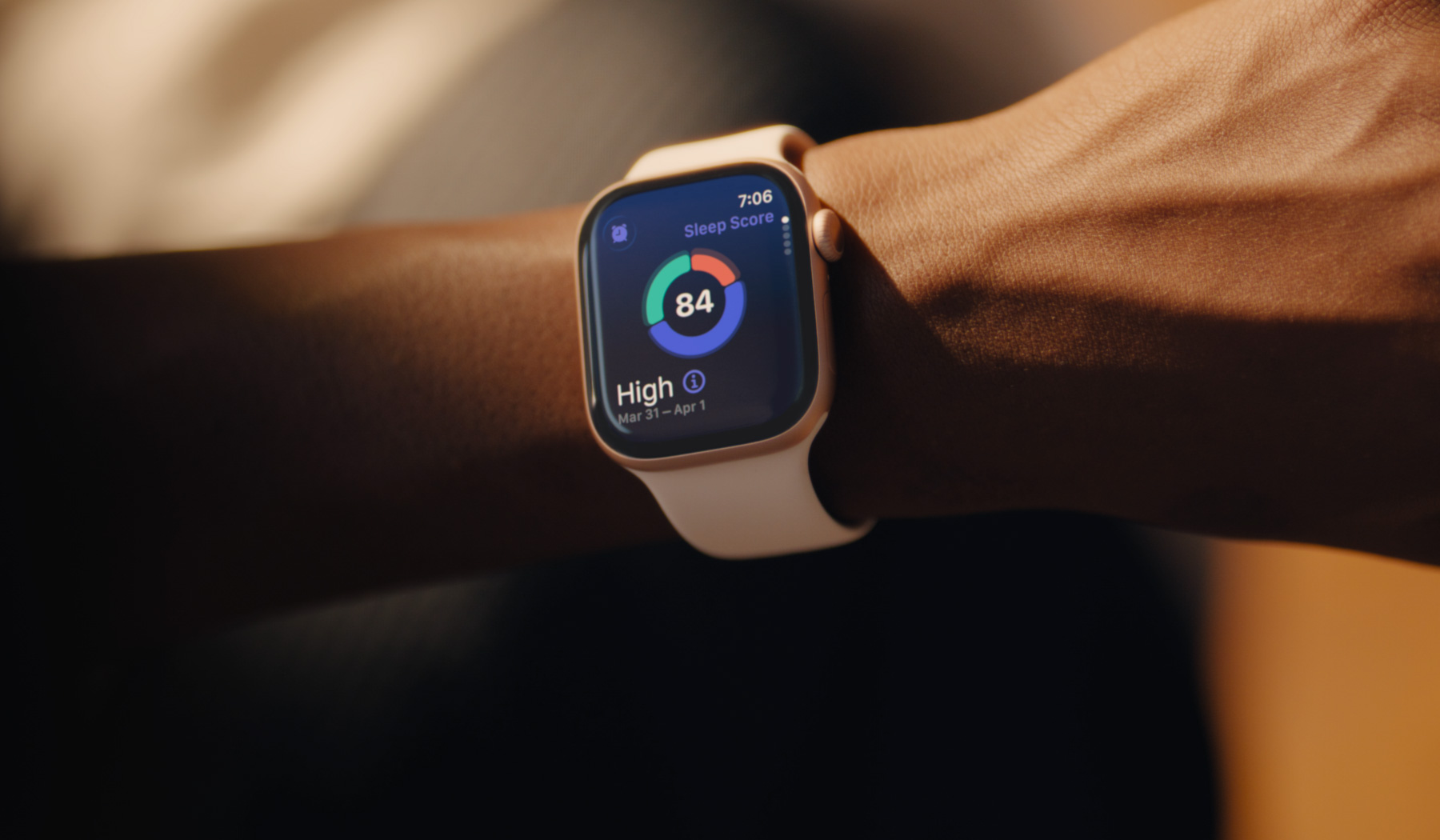
Q3. Why do sleep scores vary daily, and how accurate are they?
The 'total sleep time' is relatively accurately measured. However, the accuracy of distinguishing sleep stages like 'deep sleep' or 'REM sleep' is still significantly lower compared to medical equipment (polysomnography). Instead of fixating on last night's absolute figures, it's better to use them as a reference to understand trends over a week or a month.
Q4. Can the blood pressure measurement feature replace hospital sphygmomanometers?
Not yet; it cannot fully replace them. The current wrist blood pressure measurement method without a cuff lacks standardized verification protocols and has many accuracy controversies. If blood pressure management is necessary, it should be based on a home blood pressure monitor that wraps around the arm.
Q5. Is the calorie consumption during exercise accurate?
Unfortunately, there is quite a large margin of error. The actual consumption can vary significantly depending on the type of exercise, individual physique, and movement characteristics. Rather than relying too heavily on the calorie numbers from the smartwatch when dieting, it's much more accurate to monitor changes in weight or waist circumference and keep a record of food intake.
A small screen shining on the wrist. We check the time there, reply to messages, and track our daily steps. Smartwatches have become part of our lives. Especially when it comes to 'health,' this little device acts as a personal health assistant, monitoring my heart 24/7, analyzing my sleep, and recording my exercise. But one wonders, how accurate are the numbers this tiny laboratory provides? My heart rate, sleep score, blood oxygen levels... How much can we trust this data, and how should we use it? Today, let's look into the scientific principles and realistic limitations of health data from smartwatches.
Accuracy Reality Check by Indicator
How accurate are the various health indicators provided by smartwatches? Let's explore realistic expectations for each item.
1. Heart Rate (HR): Heart rate while sitting still or walking lightly is quite accurate. However, during intense movements like running or strength training, accuracy may drop due to 'noise' from movement. If you want to measure exercise intensity precisely, wearing a heart rate strap on the chest is more reliable.
2. Arrhythmia Detection (Atrial Fibrillation): Some smartwatches with ECG features show very high accuracy in detecting 'Atrial Fibrillation (AF)' for 'screening' purposes. It serves as an early warning system that can accidentally discover risk signals when there are no symptoms. However, this is limited to 'atrial fibrillation' among many types of arrhythmias and cannot diagnose others.
3. Sleep Analysis: While 'total sleep time' is relatively accurate, analyzing sleep stages like 'deep sleep' and 'REM sleep' should only be seen as a reference. The principle is fundamentally different from medical equipment (polysomnography), so there can be significant errors. Instead of being disappointed with last night's deep sleep being '20 minutes,' it's wiser to use it to observe trends in average deep sleep time from this week compared to last week.
4. Blood Oxygen Levels (SpO₂): The method of measuring with light on the wrist raises concerns that accuracy may drop in situations with poor peripheral blood circulation, such as skin color, tattoos, or cold hands. In cases of respiratory diseases or suspected hypoxia, a medical measuring device that fits on the fingertip must be used.
Episode: Mr. Kim Hyun-soo's Experience as a 40s Office Worker
Mr. Kim Hyun-soo, a 40s office worker, received a notification from his smartwatch one night saying, 'Irregular heartbeat detected.' Although he had no symptoms, he visited the hospital a few days later and was diagnosed with 'paroxysmal atrial fibrillation.' "If it weren't for the watch notification, I would have had no idea I had arrhythmia. It has been a lifesaver for me." His case illustrates that while smartwatches cannot provide a 'diagnosis,' they can be an important clue for 'early detection.'
Why Are There Errors, and How to Use Smartly?
The reasons for inaccuracies in smartwatch data are clear. The wrist is a measurement site with many variables, such as movement, skin color, body hair, and blood flow. No matter how advanced the algorithms become, it is difficult to completely overcome these physical limitations.
Therefore, we should use smartwatches as a 'health coach' rather than a 'doctor.' Instead of fixating on last night's absolute number, we should look at how my average resting heart rate has changed over the past month and what the 'trend' in sleep time is. If a negative pattern is observed continuously, it is wise to consult a doctor and use smartwatch data as 'consultation material.'
Episode: Lee Ji-young's Data Utilization Method as a Dieter
Lee Ji-young, who is on a diet, was fixated on the 'calories burned' number on her smartwatch every day. "When the watch said I burned 500 calories, I thought, 'Oh, I can eat 500 calories more today.' But I didn't lose any weight." After consulting with a nutritionist, she started to treat the watch's calorie number as a reference and focus more on daily weight changes and meal records. "By concentrating on my body's actual changes rather than numbers, my diet became much smoother."
In-Depth Exploration 1: The Magic of DLSS, Capturing Both 4K and Portable Mode
The key term for the performance of the Switch 2 is undoubtedly 'DLSS (Deep Learning Super Sampling)'. This is NVIDIA's AI upscaling technology, which essentially uses AI to make low-resolution images look sharp like high-resolution images. As a result, the gaming console can run games at a 1080p resolution while outputting results that appear to be 4K on the TV screen. This reduces the performance burden, allowing for higher frames or more elaborate graphic effects.
What's particularly interesting is that the Switch 2 uses two versions of DLSS appropriately. In docked mode connected to a TV, it uses high-quality standard DLSS focused on 4K upscaling, while in handheld mode, it utilizes a lightweight model called 'DLSS Light' that consumes less power while delivering a sharp 1080p display. Thanks to this smart technology, the Switch 2 can provide a graphic experience that surpasses the limits of portable gaming consoles.
In-Depth Exploration 2: The Meaning of Backward Compatibility with Past Legacy
Nintendo's decision to support 'backward compatibility' in the Switch 2 is a very important one. This shows a strong commitment to carry over the vast ecosystem of 'Switch' built over the past 8 years to the next generation, beyond merely providing convenience for users.
Consider this: if existing games did not work on the Switch 2, users would hesitate to buy the new console because they would have to give up their library of dozens or hundreds of games. However, by supporting backward compatibility, users can transition to the new device with peace of mind, and developers can continue to sell already released games on the Switch 2.
Of course, some games that use special features like HD rumble or the IR camera of the Joy-Con may be difficult to be compatible. However, the fact that most games can be enjoyed as they are makes the Switch 2 likely to achieve the smoothest 'generation transition' ever seen in a gaming console. This is a very wise strategy that benefits users, developers, and Nintendo alike.
Pre-Purchase Checklist (FAQ)
Q. If I use a MacBook and iPad, is an iPhone the only answer?
Not necessarily, but it is a very strong reason. The 'connectivity' for transferring files via AirDrop or copying/pasting between devices is the biggest advantage of the Apple ecosystem. However, Galaxy has also significantly improved its connectivity with PCs through features like 'Link to Windows,' so it's good to consider your main usage patterns.
Q. I want to use it comfortably with one hand; what model is good?
In that case, the iPhone 17 or iPhone 17 Pro models may be better choices. While the Galaxy S25 Ultra has the advantages of a large screen and S Pen, it can be a bit bulky and heavy, making one-handed operation less convenient. I recommend trying them in hand and comparing their grip.
Q. Who will find the AI features more useful?
If you often do writing tasks on your smartphone, such as drafting emails or refining sentences, the 'Apple Intelligence' integrated throughout the iPhone system might be more convenient. On the other hand, if you need to communicate with overseas customers, experience language barriers while traveling, or want to summarize meeting content right away, the practical features of Galaxy AI will be much more helpful.
Author Information: The content of this article has been objectively summarized by cross-referencing academic journals such as the American Heart Association (AHA), the American College of Cardiology (JACC), and FDA, as well as literature reviews related to digital health, regarding the clinical potential and realistic limitations of consumer wearable devices.



Comments
Post a Comment