Beginner in Game Development, Which Engine Should I Use? Comparison of Unity vs Unreal vs Godot (Focusing on Free Engines) Choosing a Game Engine: Know This First: 5 Key Q&A Q1. What is a Game Engine? Is it necessary to use one? A. Think of a game engine as a set of development tools that bundles essential functions required for making games, similar to a car engine. It includes features like rendering graphics on-screen ( Rendering ), physics effects for characters colliding with walls or jumping ( Physics Engine ), and playing background music or sound effects ( Audio System ). While it's possible to create a game from scratch without an engine, it requires an immense amount of time and effort, which is why most developers today use game engines, especially beginners! Q2. I want to start game development; are there any good free engines available? A. Yes,...
My Back Hurts! Causes by Area and Signs You Should Go to the Hospital
The Real Reason Your Back Hurts: Causes by Area and Signals to Visit the Hospital
Back Pain: What You Need to Know First - 5 Key Q&A
Q1. Should I get an X-ray or MRI immediately if my back hurts?
Most of the time, there's no need. Simple back pain without any warning signs usually improves naturally within 4 to 6 weeks. In such cases, premature imaging tests can lead to unnecessary worry or overtreatment, so they are not recommended.
Q2. What are the warning signals that require an immediate trip to the emergency room?
This is very important. If you experience loss of bowel or bladder control, numbness in the saddle area, or increasing weakness in the legs along with back pain, it could be a medical emergency known as 'cauda equina syndrome', and you should go to the hospital immediately. The same applies if you have a history of cancer, severe trauma, or unexplained fever.
Q3. Can I determine the cause just by the area that hurts?
It can provide some clues. The location of pain—whether in the center of the back, near the hips, or radiating down the legs—can indicate different suspected conditions. However, since everyone has slightly different nerve pathways, diagnosing based solely on the pain location can be risky. Accurate diagnoses are made through a doctor's examination and various tests.
Q4. What is the standard treatment for back pain?
Simply 'lying down' is no longer the answer. Instead, it's crucial to maintain daily activities within the limits of your pain and engage in consistent exercise therapy to strengthen the muscles around your back. Additionally, using anti-inflammatory pain relievers or physical therapy as needed is considered standard first-line treatment.
Q5. When is imaging like an MRI necessary?
An MRI is necessary when there are the emergency signals mentioned above, or if pain persists despite 4-6 weeks of consistent treatment, or if neurological symptoms like leg paralysis worsen, and when surgery or procedures need to be specifically considered.
"Oh, my back." This phrase is so familiar to us and holds countless stories. The stiffness of a student who has been sitting for too long, the ache of a breadwinner carrying heavy loads, and the sudden sharp pain shooting down the legs. Back pain is as common as a cold, but its causes vary greatly. Being overwhelmed by vague fears and lying down without action, or relying on misleading information found online can actually worsen the condition. Today, we will learn how to accurately interpret the signals our backs send us—starting from reading the 'map' of pain to practical management strategies.
Mapping the Pain: Primary Classification Starting with "Where Does It Hurt"
When your back hurts, the first thing to check is 'where' and 'how' it hurts. The pattern of pain can provide critical clues about the cause. While this won't lead to a definitive diagnosis, it's a very useful hint.
If the center of your back feels heavy and stiff? If you feel particularly stiff when sitting for long periods or upon waking up, it's likely due to degenerative changes in the lumbar disc or issues with the muscles around the back.
If deep pain is felt in one side of the hip? If pain worsens when standing for long periods, getting up from a seated position, or climbing stairs, it could indicate issues with the 'sacroiliac joint' that connects the pelvis and spine.
If pain radiates from the hip down to the leg? Pain that starts from the hip and travels down the back of the thigh, calf, and possibly to the toes can be referred to as 'sciatica'. This is a typical symptom that appears when the nerve roots are compressed due to a lumbar disc herniation or spinal stenosis.
Episode: Kim Ji-hoon in His 30s with Sciatica
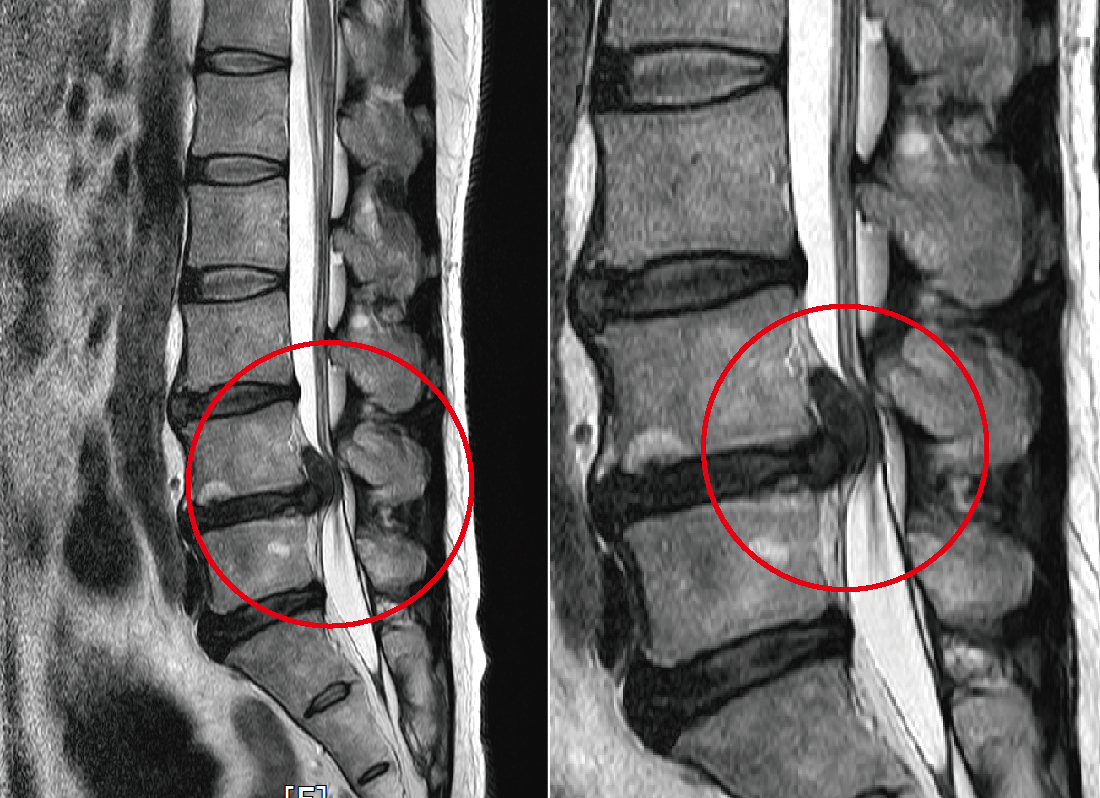
Kim Ji-hoon, who works in an office, started to feel discomfort in his right hip, which then developed into a tingling sensation down to his calf. "I thought it was just muscle tension and got a massage, but the pain worsened the next day." After visiting the hospital, he was diagnosed with sciatica caused by a herniated disc at L4-5. The doctor prescribed treatment to reduce inflammation around the nerve instead of aggressive massage, along with walking exercises.
What to Do: Evidence-Based Treatment Roadmap
Fortunately, most back pain can improve significantly with non-surgical treatments. The basic principles of treatment recommended by international guidelines are clear.
Stay Active: The old saying that "you must lie down and rest when your back hurts" is outdated. Instead, if the pain is manageable, maintaining light activities like walking can aid recovery.
Exercise: Once the pain subsides a bit, you should start exercises that strengthen your core and gluteal muscles. A strong muscle corset provides stable support for the spine, which is the most reliable way to prevent recurrence.
Utilize Medication and Non-Medication Therapies: When pain is severe, using anti-inflammatory pain relievers (NSAIDs) for a short period as prescribed by a doctor can be helpful. Additionally, methods like heat therapy, manual therapy, and acupuncture are known to relieve pain effectively.
In-Depth Exploration 1: Disc, Stenosis, Facet Joint Syndrome—What's the Difference?
Three common conditions that are often cited as causes of back pain may seem similar, but their origins and manifestations of pain differ slightly.
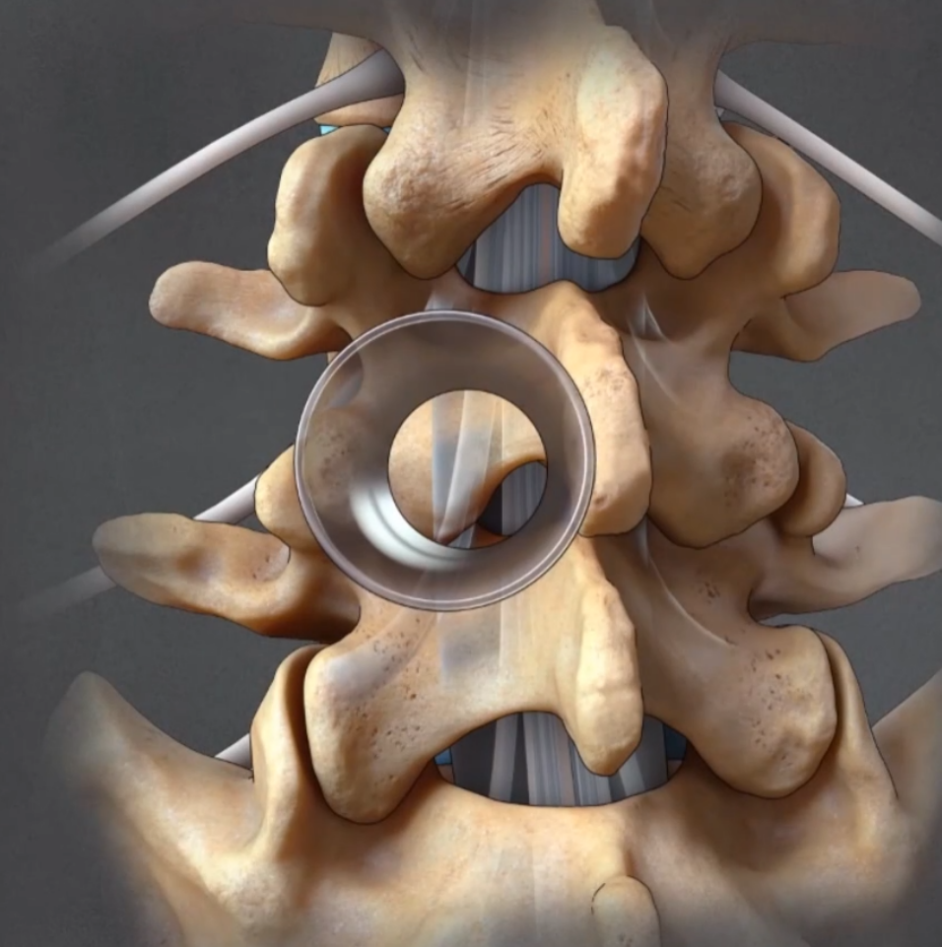
Herniated Disc occurs when the disc that cushions the vertebrae ruptures and presses on the nerves. As a result, pain worsens when bending forward, and even a cough can cause radiating pain down the leg.
Spinal Stenosis is a condition that narrows the passage through which the spinal nerves travel as one ages. Thus, bending backward can exacerbate the narrowing, leading to increased pain. A common symptom is 'neurogenic claudication', where even short walks cause intense pain in the legs, requiring frequent breaks.
Facet Joint Syndrome occurs when there is inflammation or degenerative changes in the 'facet joints' at the back of the vertebrae. Pain intensifies when bending backward or twisting to the side, and stiffness upon waking is characteristic. Even if there is pain radiating down the leg, it often stays around the hips or thighs rather than extending to the calves or feet like with a disc issue.
In-Depth Exploration 2: Limitations of the Pain Map (Dermatome) and Actual Clinical Practice
Medical textbooks feature a 'dermatome map' that illustrates how specific nerves control certain skin areas, like stating "if the L5 nerve is compressed, the big toe tingles". However, in actual clinical practice, patients' pain often does not align perfectly with this map.
This discrepancy arises because the nerve pathways vary from person to person, a single disc herniation can affect multiple nerve roots, and the brain's perception of pain is complex. Therefore, experienced doctors do not hastily conclude, "tingling in the big toe must mean a problem with the 5th disc." They use the pain location as an important reference but combine it with other neurological examination results, such as muscle weakness, sensory loss, and reflex changes, to find the cause much more accurately. This serves as a cautionary example of how dangerous self-diagnosis based solely on pain location can be.
Episode: Choi Young-soo in His 60s, a Hiking Enthusiast
Choi Young-soo, a hiking enthusiast in his 60s, experienced symptoms of stenosis, feeling pain in his legs every time he walked, requiring him to take breaks. "I thought it was a disc issue, but the hospital said it was stenosis. Bending forward actually makes it feel better," he shared. Following his doctor's advice, he started exercising in ways that naturally flexed his back, like cycling and swimming, and he was able to significantly reduce his pain and enjoy light walks again.
2-Week Home Management Guide (FAQ)
Q. I suddenly twisted my back; what should I do at home?
First, for the first 1-2 days, applying cold compresses can help reduce swelling. After that, use warm compresses to relax the muscles. Most importantly, maintain light daily activities, like walking, within the limits of your pain. Lying down for too long can actually slow down recovery.
Q. If the pain persists, when should I return to the hospital?
If you have been managing your pain at home for about two weeks and it hasn’t reduced, or if you experience worsening radiating pain down your legs, or symptoms like weakness or numbness in your legs, you should definitely return to the hospital for a proper evaluation.
Author Information: The content of this article is compiled from the guidelines of reputable organizations such as the American College of Radiology (ACR), the National Institute for Health and Care Excellence (NICE), and the American College of Physicians (ACP), as well as recent review articles from major journals like BMJ and The Lancet, providing an objective overview of approaches to back pain based on its causes and evidence-based treatment principles.



Comments
Post a Comment