Beginner in Game Development, Which Engine Should I Use? Comparison of Unity vs Unreal vs Godot (Focusing on Free Engines) Choosing a Game Engine: Know This First: 5 Key Q&A Q1. What is a Game Engine? Is it necessary to use one? A. Think of a game engine as a set of development tools that bundles essential functions required for making games, similar to a car engine. It includes features like rendering graphics on-screen ( Rendering ), physics effects for characters colliding with walls or jumping ( Physics Engine ), and playing background music or sound effects ( Audio System ). While it's possible to create a game from scratch without an engine, it requires an immense amount of time and effort, which is why most developers today use game engines, especially beginners! Q2. I want to start game development; are there any good free engines available? A. Yes,...
The Real Reason Why a Person's Face Feels 'Attractive
The Real Reasons We Find Faces 'Attractive': The Intersection of Brain, Biology, and Culture
Understanding Facial Attraction: 5 Key Q&A
Q1. Is attraction innate or cultivated?
The answer is 'both'. Biological clues like symmetry and skin texture, which can signal healthy genes, certainly exist. However, the faces we find 'familiar and comfortable' are greatly influenced by the media and culture we have been exposed to as we grew up, meaning learned attraction plays a significant role.
Q2. Is a symmetrical face always beautiful?
Not necessarily. Our brains accept slight asymmetries that occur during development as natural. In fact, faces that appear perfectly symmetrical, as if created by a computer, can feel artificial or awkward. The brain prefers to avoid 'severe asymmetry,' but it does not solely favor 'perfect symmetry.'
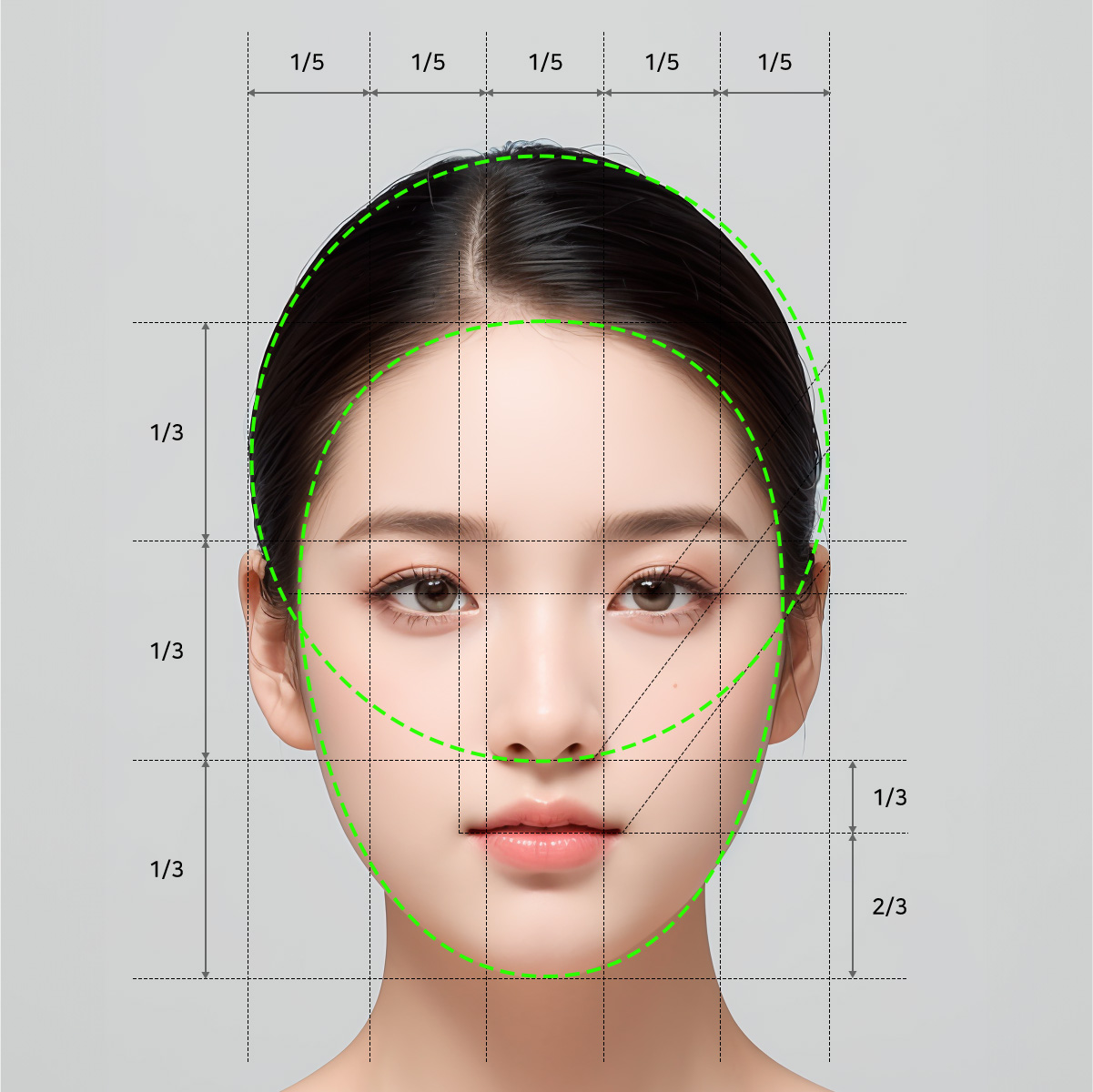
Q3. Is the 'golden ratio' scientifically the secret to beauty?
There are many exaggerations. While certain proportions may look attractive on some faces, the golden ratio has not been validated as an 'absolute law of beauty' applicable to everyone. Attraction is the sum of many complex factors, not just one proportion.
Q4. Why do beauty standards differ by country and generation?
Our brains are drawn to 'easy-to-process' information. As we grow up, we develop a statistical 'average (prototype)' of faces we frequently see and become familiar with, leading to comfort and attraction toward faces that resemble this average. When media or trends change, so do the brain's statistics, ultimately shifting preferences.
Q5. Do expressions and voices also affect attraction?
They have a tremendous impact. A static photo of a face (static cues) is far less influential than a bright smile, warm gaze, or trustworthy voice, which can significantly alter our perception of attractiveness in real-time.
When we first meet someone, we reportedly judge our liking for them in just 0.2 seconds. What is the nature of this rapid and instinctual 'attraction'? Is it simply a matter of golden ratios or distinct facial features? Perhaps the feeling we have of finding someone 'beautiful' is a process where our brains read 'efficient processing methods' and 'advantageous survival signals' developed over millions of years of evolution. Today, we will explore this complex sense of attraction at the intersection of neuroscience, biology, and cultural learning.
Background: Why Does the Brain Feel 'Good' About Certain Faces?
Our brains are like gigantic 'prediction machines.' Instead of passively receiving the information we see, we first predict, "This is going to be OOO," and then compare it with the actual incoming information to adjust our perception. The same applies when recognizing faces. In just 0.2 seconds, we must quickly infer numerous signals about whether a person is dangerous, friendly, or healthy. In this process, the brain tends to feel positive emotions, or 'attractiveness,' for faces that are easy to process (those that match predictions and are familiar), those that carry signals likely favorable for survival and reproduction (health, youth), and those associated with past positive experiences.
Development: 10 Driving Forces Behind the Judgment of 'Attractiveness'
The emotion we call 'attraction' is not the result of a single factor but rather a complex interplay of various forces.
1. Averageness: A 'typical' face synthesized from multiple faces is easier for the brain to process, providing comfort and favor. Contrary to the notion of "lack of individuality," this is the most efficient and safest signal from the brain's perspective.
2. Appropriate Symmetry: Severe asymmetry can suggest instability during development, leading the brain to prefer a certain level of symmetry. However, perfect symmetry can feel unnatural.
3. Sexual Dimorphism: Signals influenced by hormones, such as masculine features (prominent jawline, cheekbones) or feminine features (big eyes, short chin), affect attraction. However, preferences can vary widely depending on culture or individual.
4. Skin Texture and Tone: A uniform and smooth skin tone is interpreted as a strong biological signal of 'health' and 'youth,' enhancing attractiveness.
5. Neoteny: Faces with child-like features, such as large eyes and short chins, can trigger feelings of familiarity or a desire to protect, leading to attraction.
6. Distinctiveness: Relying solely on 'averageness' is insufficient. Attractive traits, unique eye shapes, or impressive lip lines enhance memorability and strengthen attractiveness.
Episode: Exchange Student Kim Ji-soo's Experience
Exchange student Kim Ji-soo from Korea felt that all the faces around her seemed unfamiliar and exotic when she first arrived in Paris, France. However, after living there for six months, making friends, and being exposed to the media, she found that the initially awkward faces became increasingly attractive and comfortable. "At first, they all looked similar, but the more I saw them, the more I noticed their unique charms. Now, I think faces with distinct features feel more familiar to me." This illustrates how the brain updates the statistics of 'frequently seen faces,' connecting familiarity with liking through the 'mere exposure effect.'
7. Expressions and Gaze (Dynamic Cues): A face that remains still is less compelling than a genuine smile or stable eye contact, which significantly increases trust and intimacy.
8. Familiarity and Exposure (Mere Exposure): The brain judges frequently seen faces as safe. The more we become accustomed to K-pop idols, the more attractive their faces seem, which is deeply related to this 'mere exposure effect.'
9. Halo Effect: Positive information such as "that person is kind" or "competent" can lead to a more attractive evaluation of that person's appearance, showcasing a powerful psychological effect.
10. Norms and Tools: The trends and norms of the societies we belong to also shape standards of attractiveness. Makeup, hairstyles, and even social media filters are 'tools' that can change the visual ratios and textures of faces, significantly impacting attractiveness evaluations.
Transition: There Is No 'Universal Law,' Only Categories and Weights
Ultimately, it is reasonable to conclude that there is no 'absolute law of beauty' that transcends all cultures and eras. While there may be evolutionary preferences for 'defaults' like symmetry or healthy skin, our culture, media, and personal experiences change the 'weights' applied to these defaults.
This is why the 'golden ratio' or 'one law' cannot fully explain attraction. Attraction arises from the interplay of various signals, including proportions, skin texture, expressions, familiarity, and information about the person, all intricately woven together.
Conclusion: 'Expression' Changes More Than 'Innate Faces'
The good news is that the realm of 'expression,' which we can change through effort, has a far greater impact on attraction than the 'innate forms' over which we have no control.
In photos and videos, use soft lighting at a 45-degree angle to enhance contours and look slightly up at the camera to create highlights in the eyes. Most importantly, a 'genuine smile' that engages the eye muscles immediately boosts trust.
In everyday interactions, maintaining stable eye contact, lightly nodding in response to what others say, and speaking in a clear, moderate tone will make you appear much more attractive and trustworthy.
Makeup and grooming can serve as tools that enhance likability, not just cover flaws. Contouring can visually correct facial dimensionality and symmetry, well-groomed eyebrows can instill trust, and adjusting hairstyles can significantly alter overall proportions.
Episode: Office Worker Park Hyun-woo's Halo Effect
Office worker Park Hyun-woo initially thought his new colleague seemed 'ordinary.' However, after working together on projects for several weeks, he discovered how capable, caring, and humorous that colleague was. One day during a meeting, while watching the colleague's presentation, Park Hyun-woo suddenly realized, "That person is really attractive and cool." This illustrates the powerful 'halo effect,' where positive information about someone's kindness and competence boosts their appearance evaluation.
In-Depth Exploration 1: The Paradox of 'Averageness' - Why Are We Attracted to 'Ordinariness'?
When we think of attractiveness, we often associate it with 'uniqueness,' but from a neuroscience perspective, 'averageness' is considered one of the key elements of attraction. This phenomenon, known as koinophilia (the preference for the common), has been consistently demonstrated by studies showing that a 'composite average face' created by synthesizing multiple faces is rated more attractive than individual faces.
There are two reasons for this. First, processing fluency. Our brains can process familiar and average information much faster and more easily, leading to a tendency to mistake this 'comfortable processing' for 'liking.' Second, from a biological perspective, average faces may signal a 'healthy gene pool' without extreme genetic variations. Extremely unique features might indicate developmental errors or mutations, so the brain may have evolved to find the most 'safe and standard' forms attractive.
In-Depth Exploration 2: The Power of the 'Duchenne Smile' - How Do Real and Fake Smiles Differ?
We've mentioned that 'dynamic cues' like expressions are important for attraction. Among these, the most powerful signal is the Duchenne smile, or the 'genuine smile.'
This smile, discovered by French neurologist Duchenne, is characterized by the contraction of not only the muscles that pull the corners of the mouth (zygomaticus) but also the muscles surrounding the eyes (orbicularis oculi). In simple terms, it is a smile where the mouth is smiling while the 'eyes' are smiling too. These eye muscles are difficult to control consciously, meaning they contract naturally only when we genuinely feel positive emotions.
Our brains are remarkably adept at detecting this subtle difference. A 'fake smile' that only involves the mouth is interpreted as a social courtesy or obligation, while a 'Duchenne smile' that engages the eyes is unconsciously judged as a sign that the person is genuinely happy and sending trustworthy positive signals. No matter how perfect static features may be, a single heartfelt Duchenne smile can significantly elevate a person's attractiveness.
Common Misunderstandings (FAQ)
Q. Is the saying "the golden ratio is the secret to a beautiful face" incorrect?
It is not a universal law. While it can explain some cases, there are countless attractive faces that do not conform to the golden ratio. Attraction is a complex interplay of factors that cannot be measured by a single number.
Q. Isn't it ultimately all about genes?
Not at all. While innate skeletal structure is important, factors like skin texture, expressions, tone of voice, hairstyle, and a person's attitude and confidence have a far greater influence on attraction.
Q. Terminology: What are 'processing fluency' and 'neoteny'?
Processing fluency refers to how easily and comfortably information is processed in the brain, and the brain tends to interpret this comfort as a 'liking' emotion. Neoteny refers to the phenomenon of retaining child-like features, such as large eyes or small noses, into adulthood.
Author Information: The content of this article has been objectively structured by cross-referencing academic research related to perceptual psychology, evolutionary psychology, and social cognitive science, focusing on how 'averageness,' 'symmetry,' 'sexual dimorphism,' 'dynamic cues,' and 'halo effects' complexly interact in human perception of 'attractiveness' along with practical application tips.



Comments
Post a Comment