Beginner in Game Development, Which Engine Should I Use? Comparison of Unity vs Unreal vs Godot (Focusing on Free Engines) Choosing a Game Engine: Know This First: 5 Key Q&A Q1. What is a Game Engine? Is it necessary to use one? A. Think of a game engine as a set of development tools that bundles essential functions required for making games, similar to a car engine. It includes features like rendering graphics on-screen ( Rendering ), physics effects for characters colliding with walls or jumping ( Physics Engine ), and playing background music or sound effects ( Audio System ). While it's possible to create a game from scratch without an engine, it requires an immense amount of time and effort, which is why most developers today use game engines, especially beginners! Q2. I want to start game development; are there any good free engines available? A. Yes,...
Why do sparks fly when you put metal in a microwave?
Why Does Metal Spark in the Microwave? (Exploring Electromagnetic Waves and Plasma)
Microwave and Metal: 5 Key Q&As
Q1. Does metal always spark?
No, it depends on the 'shape' of the metal. Thin, pointed forks, crumpled aluminum foil, and pointed gold edges on plates are particularly dangerous. In contrast, a round spoon may spark less, but it is still not recommended.
Q2. Are stainless steel cups or tumblers okay?
No, they are not. Metal containers reflect microwaves, preventing food from heating properly and can cause sparks to fly from the edges, damaging the inside of the microwave.
Q3. There are metal shelves and walls inside the microwave; why is that okay?
That's a great question. The metals used inside (such as the turntable, shelves, and the mesh inside the door) are designed with smooth surfaces and safe shapes to prevent sparks. They avoid concentrating the electric field and are grounded to minimize sparking.
Q4. Can I cover food with foil to heat it up?
It is absolutely not recommended. Especially if the aluminum foil is crumpled or has raised sections, the sharp ends pose a significant risk of sparking. Some recipes may use small smooth areas, but it's safest to avoid it at home.
Q5. If I accidentally sparked once, is my microwave broken?
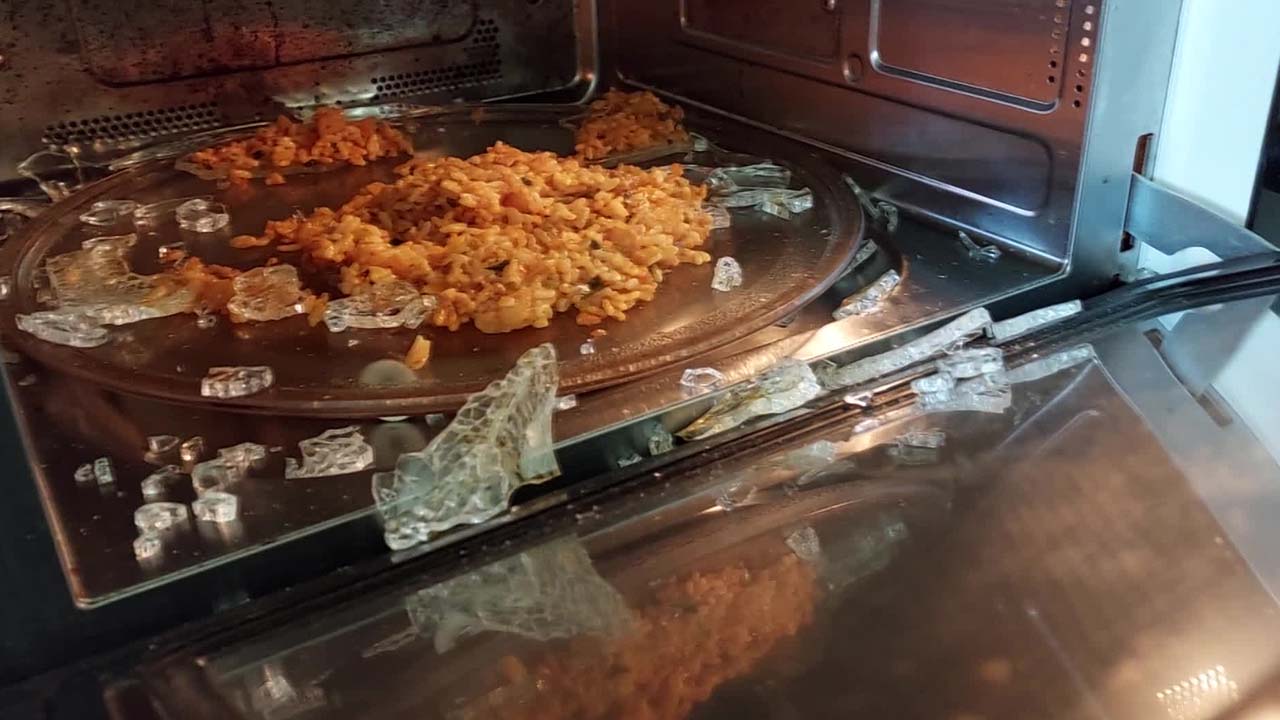
Even a short spark can damage the magnetron (the wave generator) or the internal coating. If you smell something burning or see scorch marks inside, it's best to stop using it immediately and have it checked.
Late at night, as I was about to heat up frozen dumplings in the microwave, I suddenly realized I hadn't removed the foil from the packaging. As I closed the door and pressed the start button, I was startled by a loud "crackling!" and a flash of blue sparks. Have you ever experienced that? Why does the microwave react so violently when metal is involved? While it heats water, it seems to burn metal. Today, we'll take a scientific look at the invisible electromagnetic waves and the intense interactions with metal happening inside the microwave.
Setting the Stage: What Happens Inside the Microwave
First, we need to understand how the microwave heats food. The heart of the microwave, a component called the 'magnetron', generates powerful electromagnetic waves, specifically microwaves at about 2.45GHz, and sends them into the metal box (cavity). These microwaves rotate polar molecules, like water molecules, which have both (+) and (-) charges, billions of times per second. This intense molecular rotation (dielectric loss) creates frictional heat that is what makes food hot.
At this time, the metal walls and the mesh inside the door of the microwave act as mirrors, trapping the microwaves so they cannot escape. However, when we accidentally place an external metal object, like a 'metal fork', into this peaceful setting, the situation changes dramatically.
The Birth of Sparks: Electric Field Concentration → Insulation Breakdown → Plasma
Unlike water molecules, metals are conductors with a lot of freely moving 'free electrons'. When the strong electric field of microwaves hits the metal, these free electrons quickly rearrange themselves in response to the electric field. The problem is this phenomenon can manifest very differently depending on the 'shape' of the metal.
At the sharp ends of forks, the edges of crumpled aluminum foil, and the thin gold edges of plates, the electric field intensifies and concentrates beyond imagination. This is called 'electric field concentration (Edge Effect)'.
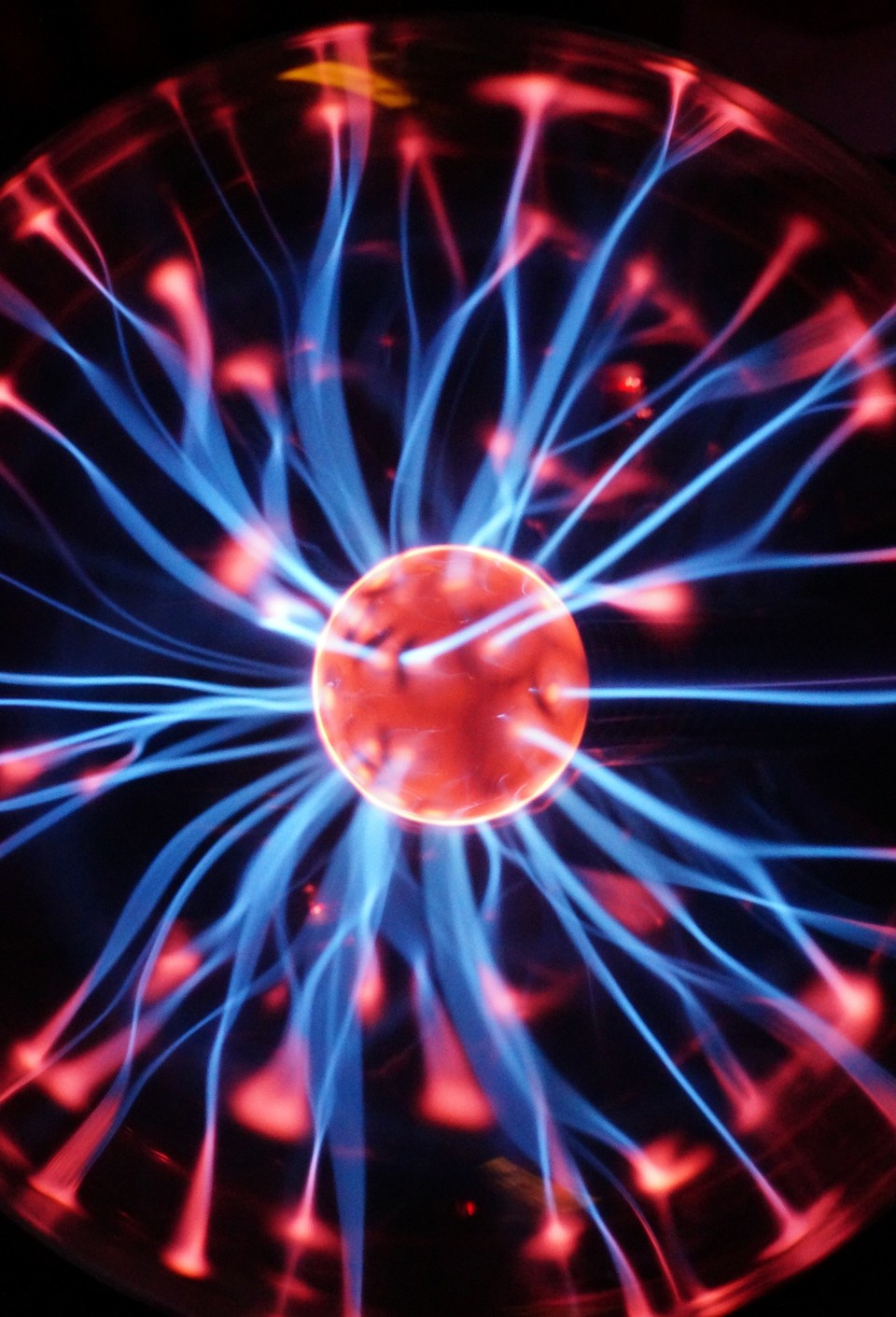
This extremely strong electric field at a point does not leave the surrounding air molecules undisturbed. It breaks down the air's insulating state, stripping electrons from air molecules and forcing a current to flow. This is the phenomenon we call 'spark' or 'discharge'. The blue and purple flames we see are actually 'plasma', which is ionized gas.
Episode: College Student Kim Min-soo's Scary Experience
College student Kim Min-soo put leftover chicken wrapped in aluminum foil into the microwave. "I thought just 30 seconds would be fine." Just 5 seconds after pressing the start button, he was shocked to see sparks flying with a loud 'crackling' noise, and he quickly unplugged it. The spark was from the sharp edge of the crumpled foil. Since that day, he developed the habit of checking packaging materials two or three times before putting them in the microwave.
“Is Metal Always Dangerous?” Exceptions and Counterexamples
Not all metals inside the microwave are dangerous. As mentioned earlier, the metal walls and door, as well as some metal shelves in products with grilling functions, are all safely 'designed'. They have smooth surfaces, no sharp edges, and are grounded, leaving no room for electric field concentration.
The risk also varies depending on the object. Items with multiple sharp ends, like forks, are very dangerous, but a round and smooth spoon may spark less. (Of course, since spoons are metal, they reflect waves, which interfere with heating, so they shouldn't be used!) Thus, the phenomenon of sparking primarily results from the 'sharp shape' and 'unsecured state' of the metal.
Episode: Housewife Lee Seo-yeon's Plate
Housewife Lee Seo-yeon was shocked to see sparks flying from the edge of her cherished wedding gift, a decorative plate with a gold rim, when she put it in the microwave. "I never imagined that thin gold rim was metal. Upon closer inspection, I noticed the edge was charred." Since that day, she has stopped using any dishes that do not have a 'Microwave-safe' label.
In-Depth Exploration 1: Why Sharp Points Are Dangerous
Why do sparks only occur at sharp points? This is similar to the principle of a 'lightning rod'. When an electric field is applied to a conductor like metal, charges (electrons) gather on the surface. If the surface is sharp, the charges concentrate at that narrow tip due to the repulsive forces between them. This is called 'electric field concentration (Field Enhancement)'.
Just as focusing sunlight with a magnifying glass can ignite paper, the powerful electric field concentrated at the sharp end of a metal easily breaks down the insulating strength of the surrounding air. The moment the air transitions from an insulator to a conductor, electrons move, causing a 'crackling' discharge (spark). The numerous sharp edges of crumpled foil act like hundreds of tiny lightning rods, creating sparks inside the microwave.
In-Depth Exploration 2: The Principle of Magnetrons and Standing Waves
How does the 'magnetron', the heart of the microwave, produce powerful microwaves? The magnetron is a vacuum tube that rotates electrons in a spiral between powerful magnets, amplifying and emitting electromagnetic waves at a specific frequency of 2.45GHz.
The emitted microwaves travel through a metal passage called a 'waveguide' into the cooking chamber (cavity). The metal walls of the cooking chamber reflect these waves, creating patterns of interference where emitted waves and reflected waves cancel or amplify each other. This results in areas of no waves (node) and areas of strong waves (antinode, hot spots) inside the microwave, known as 'standing waves'. The reason food heats unevenly, with some parts cold and others hot, is due to these standing waves. The microwave's 'turntable' is a scientifically designed device invented to evenly distribute food through these hot spots.
How to Use Safely: Practical Checklist (FAQ)
Q. Is it okay if my dish has a gold rim?
No, it is not. That thin gold rim is indeed metal. With such a thin and sharp edge, the risk of electric field concentration causing sparks is very high.
Q. Can I heat convenience store lunch boxes in their containers?
That’s because they are made of special plastic containers labeled 'Microwave-safe'. However, do not put food in containers with thin metal foil lids or in aluminum containers.
Q. What should I do first if sparks fly?
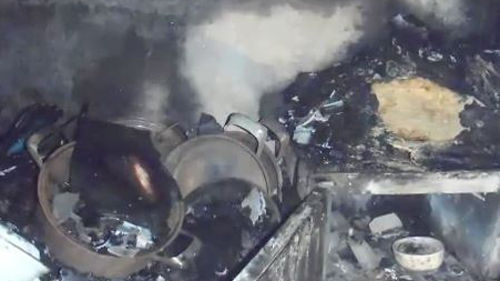
Immediately press the 'stop' button. If the sparks disappear right away, it’s advisable to unplug the microwave before opening the door to completely cut off power. If the sparks continue or there is a strong burning smell, keep the door closed (to block oxygen), unplug it, and prepare a fire extinguisher or call emergency services.
Author Information: The content of this article is based on the fundamental principles of electromagnetism and heat transfer (magnetron, standing waves, electric field concentration, insulation breakdown) and objectively summarizes the interactions and risks of microwaves and metals with real-life examples.


Comments
Post a Comment