Beginner in Game Development, Which Engine Should I Use? Comparison of Unity vs Unreal vs Godot (Focusing on Free Engines) Choosing a Game Engine: Know This First: 5 Key Q&A Q1. What is a Game Engine? Is it necessary to use one? A. Think of a game engine as a set of development tools that bundles essential functions required for making games, similar to a car engine. It includes features like rendering graphics on-screen ( Rendering ), physics effects for characters colliding with walls or jumping ( Physics Engine ), and playing background music or sound effects ( Audio System ). While it's possible to create a game from scratch without an engine, it requires an immense amount of time and effort, which is why most developers today use game engines, especially beginners! Q2. I want to start game development; are there any good free engines available? A. Yes,...
Why Does 'First Love' Remain Unforgettable? (Answers from Neuroscience and Psychology)
Understanding First Love Memories: 5 Key Q&A
Q1. Is the special feeling of first love just an embellishment?
It's not just embellishment. Our brains are designed to give special weight to intense emotional experiences we encounter for the first time. As time passes, memories are reinterpreted and cultural narratives are added, working together with biological imprinting and psychological embellishment.
Q2. Why are memories from our teens and early twenties the most vivid?
This period is when the brain undergoes significant reorganization, known as a 'sensitive period'. Particularly, the brain circuits that process emotions and rewards are very malleable at this time. New, intense stimuli received during this period leave deep traces (engrams) in the brain. Psychologists refer to the abundance of memories from this time as the 'reminiscent bump'.
Q3. Is physical appearance, like the golden ratio or symmetry, important?
Of course, biological cues like symmetry or healthy skin can attract us, but that’s not everything. In fact, 'familiarity' may be more important. We tend to feel attracted to faces that we see often and feel comfortable with, meaning our brains prefer faces that are easier to process. This is also why beauty standards differ from country to country.
Q4. Do expressions and voices also affect attractiveness?
They have a tremendous impact. Expressions like a genuine smile (Duchenne smile) that engage the eyes, along with stable eye contact and a trustworthy voice, can dramatically change our attraction scores in real time.
Q5. What should I do if memories of past loves interfere with my current relationship?
It's not helpful to compare the intensity of past experiences with the stability of the present. In your current relationship, it's important to create 'novelty'. This can be done by visiting new places together or sharing new hobbies to awaken the brain's reward circuits again. If memories from the past keep resurfacing and cause distress, it might help to temporarily distance yourself from the music or places that trigger those memories.
Like an old letter found by chance in a drawer, memories of first love come to us unexpectedly. The songs we heard back then, the scent of the air that day, even the sensations of our hearts racing in those moments. Why do these memories linger in our lives with such vivid colors and weight compared to others? Many people attribute this to simple 'embellishment' or 'nostalgia', but in reality, there is a complex and beautiful science behind this, shaped by our brain's memory system, hormones, and the culture we belong to. Today, let's explore the essence of these bittersweet memories with the guidance of neuroscience and psychology.
Why Does the Brain Remember 'Firsts' So Specially?
The reason our brains store first love as something special is due to the 'timing' of the experience and the intensity of the 'emotions' involved.
1. When the Brain is Most Malleable (Neuroplasticity)
Experiencing first love during adolescence to early twenties is a 'sensitive period' when the brain undergoes major remodeling. During this time, the circuits responsible for emotions, rewards, and social relationships (such as the amygdala and basal ganglia) are actively being rewired. Intense social and emotional stimuli encountered during this open period leave deep, solid traces (engrams) in the brain.
2. Emotional Storms and Memory Consolidation
First love is accompanied by a powerful state of 'emotional arousal' mixed with excitement, anticipation, anxiety, and fear. This intense emotion triggers the release of hormones like adrenaline and norepinephrine, strengthening the connections between the 'hippocampus', which stores memories, and the 'amygdala', which tags emotions. As a result, the event of "first love" is classified as 'very significant', continuously replaying during sleep and solidifying into long-term memory.
Episode: Park Sunwoo's 'Proustian Phenomenon'
Park Sunwoo, a man in his 40s, often experiences a resurgence of first love memories when a 90s pop song unexpectedly plays on the radio, even though more than 20 years have passed. "Just hearing that song brings back the smell of the street we walked on, and the temperature of the autumn breeze so vividly." This is a type of 'Proustian phenomenon', demonstrating the brain's remarkable connections that certain sensory cues, like specific sounds or smells, can evoke intense emotional memories.
Between Exaggeration and Truth: The Re-editing of Memories
The reason first love memories seem particularly beautiful is not only due to biological factors but also because of psychological and cultural 're-editing' processes.
Idealization: Each time we retrieve a memory, we unknowingly modify and re-store it. During this process, negative details such as conflicts or mundane daily events fade away, while the most joyful moments (peaks) and final moments (ends) represent the entire memory (peak-end rule). Over time, there is a tendency to selectively reinforce only the positive memories.
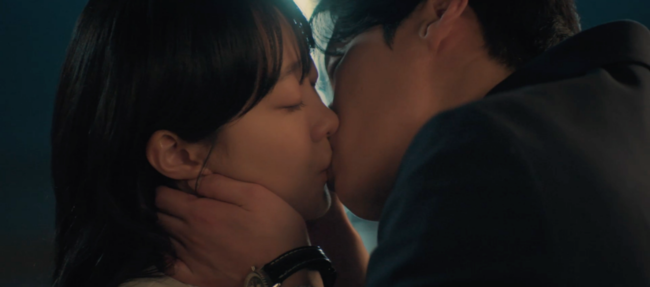
Influence of Cultural Scripts: We learn cultural scripts through movies, dramas, and novels that teach us that 'first love is nostalgic and pure'. These external narratives serve as guidelines for editing our memories, leading us to reinterpret our experiences in a more beautiful and destined way according to these scripts.
In-Depth Exploration 1: The Reminiscent Bump Phenomenon
In psychology, there is a fascinating memory theory known as the 'Reminiscent Bump'. When asked to recall their entire lives, older adults tend to disproportionately remember their late teens to early twenties more vividly than other periods.
Why this period? It’s because this is when the identity of 'self' is intensely formed. Experiences like going to college for the first time, leaving home for the first time, getting a job for the first time, and falling in love for the first time all occur during this time, concentrating many 'first events' that shape the narrative of our lives. First love becomes one of the most powerful reference events that define 'my story' at the peak of this 'reminiscent bump'. Therefore, no matter how much time passes, it continues to be recalled not just as a past event, but as part of my identity.
In-Depth Exploration 2: The Power of the Duchenne Smile, Why Does That Smile Remain Unforgettable?
One reason first love memories remain positive is likely due to the 'genuine smiles' we witnessed back then. In psychology, we distinguish between genuine and fake smiles, with the 'genuine smile' referred to as the 'Duchenne Smile'.
A fake smile uses only the muscles that pull the corners of the mouth (zygomaticus). However, a Duchenne smile involves the contraction of muscles around the eyes (orbicularis oculi) along with the mouth, making the eyes naturally crinkle. These eye muscles are very difficult to control consciously, so they only contract naturally when we truly feel positive emotions.
Our brains pick up on this subtle difference remarkably well. A smile that only involves the mouth is seen as a social courtesy, but a Duchenne smile, which also engages the eyes, is unconsciously perceived as a sign that the other person is genuinely happy and is sending trustworthy positive signals. The radiant smile that remains in the memory of first love may have been the most pure and powerful signal of 'sincerity' that our brains instinctively detected.
Episode: Lee Sujin's Realization After 10 Years of Marriage
Lee Sujin, who has been married for 10 years, sometimes compares the intense excitement of her first love with the familiar comfort of her husband. "I felt a bit disappointed that there’s no longer excitement with my husband." However, after learning about the 'halo effect', her perspective changed. "The trust, competence, and dedication that have built up from raising children together and overcoming challenges have made my husband appear more wonderful and attractive than any excitement ever could." She realized that the 'stimulation' of first love and the 'stability' of current love are two different kinds of attraction.
How to Separate Memories from the Present (FAQ)
Q. I find it hard to focus on my current relationship because memories of my first love come up too often.
The first step is to consciously separate the past from the present. It's important to acknowledge that the intensity of first love had a novelty bonus and to consciously reflect on the values of your current relationship (stability, trust, comfort). 'Trigger management', such as temporarily distancing yourself from music or social media that evoke past memories, can also be helpful.
Q. Can I use memories of the past to improve my current relationship?
Absolutely. If you remember that the intensity of first love came from 'novelty' and 'stimulation', it’s a good idea to create 'small novelties' with your current partner. Activities like traveling to a neighborhood you’ve never been to or learning a new hobby together can help 'awaken' both of your brain's reward circuits and strengthen your relationship.
Author Information: The content of this article has been organized from an objective perspective by cross-referencing academic literature related to memory consolidation, emotional neuroscience, perceptual psychology, and relationship psychology, detailing how memories of 'first love' persist and are reconstructed through the interplay of biological imprinting, cognitive bias, and cultural learning.



Comments
Post a Comment